The Garden's Secret Symphony: An Auditory Guide for Therapeutic Horticulture
When we think of a therapeutic garden, our minds usually flood with visual and tactile imagery: the vibrant hue of a marigold, the fuzzy texture of lamb’s ear, or the rich aroma of crushed rosemary.
However, one of the most powerful tools for grounding, cognitive stimulation, and emotional regulation in a therapeutic space is entirely invisible. It’s the soundscape.
For therapeutic horticulture facilitators, intentionally designing for and engaging the sense of hearing can unlock deep therapeutic benefits. Sound can act as a gentle anchor for mindfulness, a cue for memory recall in older adults, or a joyful tool for sensory exploration in children.
Here is how you can weave auditory experiences into your practice, complete with adaptable activities and resources for participants across the lifespan and ability span.
The Anatomy of a Garden Soundscape
A garden's auditory environment is generally split into two categories: biophony (the sounds of living organisms like birds and insects) and geophony (the sounds of non-living natural elements like wind, rain, and water).
As facilitators, we can curate these sounds by making deliberate choices in our plant selection and hardscaping:
Rustling & Whispering Plants: Plant ornamental grasses (like Switchgrass or Miscanthus), Bamboo (contained in pots), or Quaking Aspen trees. Their leaves catch the slightest breeze, creating a soothing, white-noise effect.
Dry & Rattling Seed Pods: Introduce plants that hold onto their seeds loudly. False Indigo (Baptisia), Love-in-a-Mist (Nigella), and Money Plant (Lunaria) produce dry pods that rattle beautifully in the autumn wind.
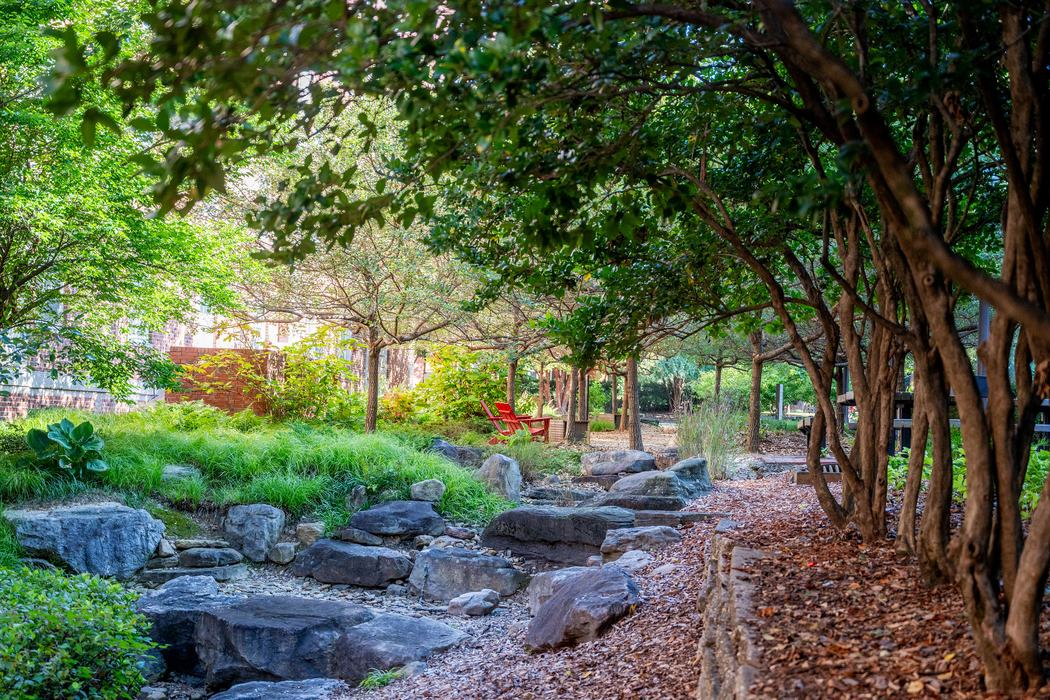
Water Features: The splash of a fountain can mask disruptive traffic noises, while a gentle, low-profile trickle can soothe anxious participants.
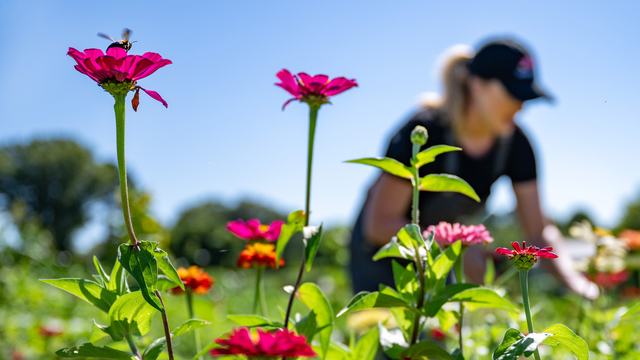
Wildlife Magnets: Cultivate tubular flowers for hummingbirds and dense shrubs for nesting songbirds. The buzzing of bumblebees on echinacea is a rhythmic, calming bassline for the garden.
An urban creek's running water contributes to the soundscape.
Auditory Activities for All Ages & Abilities
Here are three versatile, adaptable activity suggestions designed to actively engage participants with the sounds of the garden.
1. The 3-Minute Sound Map
Best for: Adults, youth, individuals experiencing stress or anxiety, and visually impaired participants.
The Activity: Provide participants with a clipboard, a blank piece of paper, and a marker. Ask them to place an "X" in the exact center of the page—this "X" represents them sitting in the garden. For three minutes, close eyes (if comfortable) and listen. Every time a sound is heard, the participant draws a symbol or writes a word representing that sound in the direction it came from relative to their "X" (e.g., a bird symbol at the top right, a wavy line for water at the bottom left).
Adaptation for Lifespan & Ability:
For Young Children/Neurodivergent Individuals: Instead of a map, play "Sound Bingo" with a visual grid of common garden sounds (a bird, a lawnmower, wind, footsteps).
For Limited Fine Motor Skills: Skip the drawing. Use verbal sharing, or have participants hold up a finger for every new sound they detect.
2. Natural Seed Pod Orchestras
Best for: Intergenerational groups, child participants, and individuals working on fine motor coordination.
The Activity: Lead a harvesting walk where participants collect dried seed pods, hollow stems, and stiff leaves. Back at the workspace, guide them in creating natural instruments. Dried poppy heads make perfect maracas; large bamboo stalks cut to different lengths can be tapped together as rhythm sticks. Conclude the session with a collaborative "garden symphony," where everyone contributes their natural sound.
Adaptation for Lifespan & Ability:
For Older Adults with Dementia: The rhythmic, predictable nature of making music promotes a sense of safety and can stimulate structural memory. Keep the instruments simple to hold.
For Low Physical Mobility: Pre-harvest a sensory bin of various seed pods and bring them directly to a tabletop or bedside, allowing participants to shake and explore them with minimal reach required.
3. The Sound Beacon Walk
Best for: Visually impaired participants, individuals building spatial awareness, and those with orientation/mobility goals.
The Activity: Hang distinct-sounding wind chimes (e.g., deep-toned bamboo chimes vs. high-pitched metal chimes) at key structural locations in the garden (like the entrance, a seating nook, or a dead-end pathway). Use these chimes as auditory landmarks to help participants navigate the space independently or practice mindful walking.
Adaptation for Lifespan & Ability:
For Sensory Overload/Autism: Ensure there is a "quiet zone" in the garden completely free of chimes or high-stimulus sounds where participants can retreat if the auditory environment becomes overwhelming.
Tailoring Auditory Stimulation Across the Lifespan
Participant Group
Therapeutic Focus
Facilitator Tip
Children & Youth
Emotional regulation & curiosity
Use high-contrast sounds (loud vs. soft) to teach self-regulation and impulse control through playful imitation.
Neurodivergent Individuals
Sensory integration
Be mindful of predictability. Mechanical sounds (like ticking solar fountains) may be more comforting than unpredictable wildlife sounds, or vice versa. Always offer noise-canceling headphones as an option.
Older Adults / Dementia Care
Reminiscence & orientation
Auditory cues can combat "sundowning," where people experience less orientation to the current time and events. The sound of a gentle water feature or familiar birdsong can trigger positive memories and reduce agitation.
Physical/Visual Rehabilitation
Spatial tracking & motor skills
Use sound as a directional motivator. "Reach your hand toward the sound of the rustling grass" combines auditory tracking with physical stretching.
Auditory programming might be isolating for people in the therapeutic group who are living with hearing loss. For these participants, it can be helpful to seat them as close to the sound source as possible to maximize their sound exposure. Assigning a volunteer to accompany them during the session and describe the soundscape in a way that allows them to take in the information will help them to continue taking part in the activity.
Facilitators can plan spaces carefully around a soundscape.
Essential Resources for Facilitators
To elevate your auditory therapeutic horticulture programming, consider integrating these tools into your toolkit:
The Merlin Bird ID App (by Cornell Lab of Ornithology): A game-changer for facilitators. Use its "Sound ID" feature live in the garden with participants. The app listens to the surrounding birds and visualizes who is singing in real-time. It’s an incredible tool for bridging the gap between hearing a sound and identifying its source, making it highly engaging for youth and seniors alike.
Sound Level Meter Apps (e.g., NIOSH SLM): Useful during your initial site analysis. Check the decibel levels of your garden space at different times of day to ensure background traffic or HVAC noise isn't crossing into a range that causes anxiety or hinders communication.
Book Recommendation:"The Sensory Order" or "Sensory Trust" Design Guides. While tailored toward landscape architecture, these resources provide excellent, evidence-based frameworks on how to design inclusive outdoor spaces specifically leveraging auditory and tactile cues.
Garden Sounds
By shifting our focus from what the garden looks like to what the garden sounds like, we invite our participants into a deeper, more immersive relationship with nature. Sound bypasses many of our cognitive barriers, speaking directly to the nervous system.
Next time you step into your therapeutic space, take a deep breath, close your eyes, and listen. What is your garden trying to say to your participants today?